From Draft NOtices, October-December 2021
An Undiscussed Consequence of Expanded Draft Registration
— Rick Jahnkow
 The most immediate danger of expanding draft registration to women is not, as some people think, an increased likelihood of a draft. The chance of that happening anytime in the near future continues to be remote. It wasn’t even on the table for serious government consideration after 9/11, or during the multiple U.S. troop deployments to the wars in Afghanistan and Iraq.
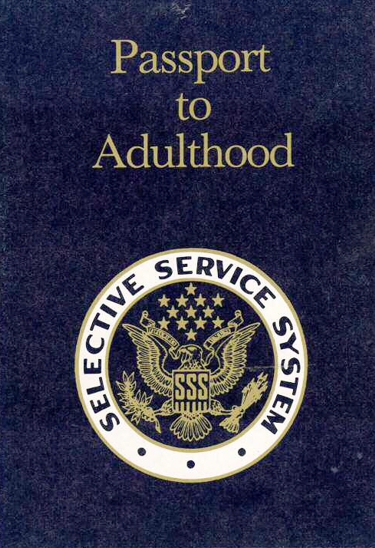
A much more imminent danger is the actions that will be taken in schools to convince the female half of the 18-year-old population to join males in registering with Selective Service.
In the 1980s, we saw how relatively low rates of male draft registration in some parts of the country plagued Selective Service. The agency would issue press releases claiming that young men were overwhelmingly showing their patriotic willingness to submit their names and contact information for the sake of national readiness, but then the media would often report that actual numbers of registrants were below the stated expectations of Selective Service. The embarrassed draft agency had to come up with an excuse for the dearth of registration enthusiasm, and the best it could come up with was that there was a simple lack of awareness among young men. This was despite millions of dollars spent on Selective Service registration promotions and the enormous amount of media coverage devoted to the issue. And when the first registration resister trials were initiated to “send a message” about the risks of non-compliance, we learned in California that the state’s registration rate went down!
 The federal government’s own ban on student aid for non-registrants was repealed in a similar manner when the U.S. Congress passed an appropriations bill in December 2020. Language added to that legislation stated that “an individual shall not be ineligible” for federal financial aid because of a failure to register with Selective Service (H.R. 133, Consolidated Appropriations Act, 2021).